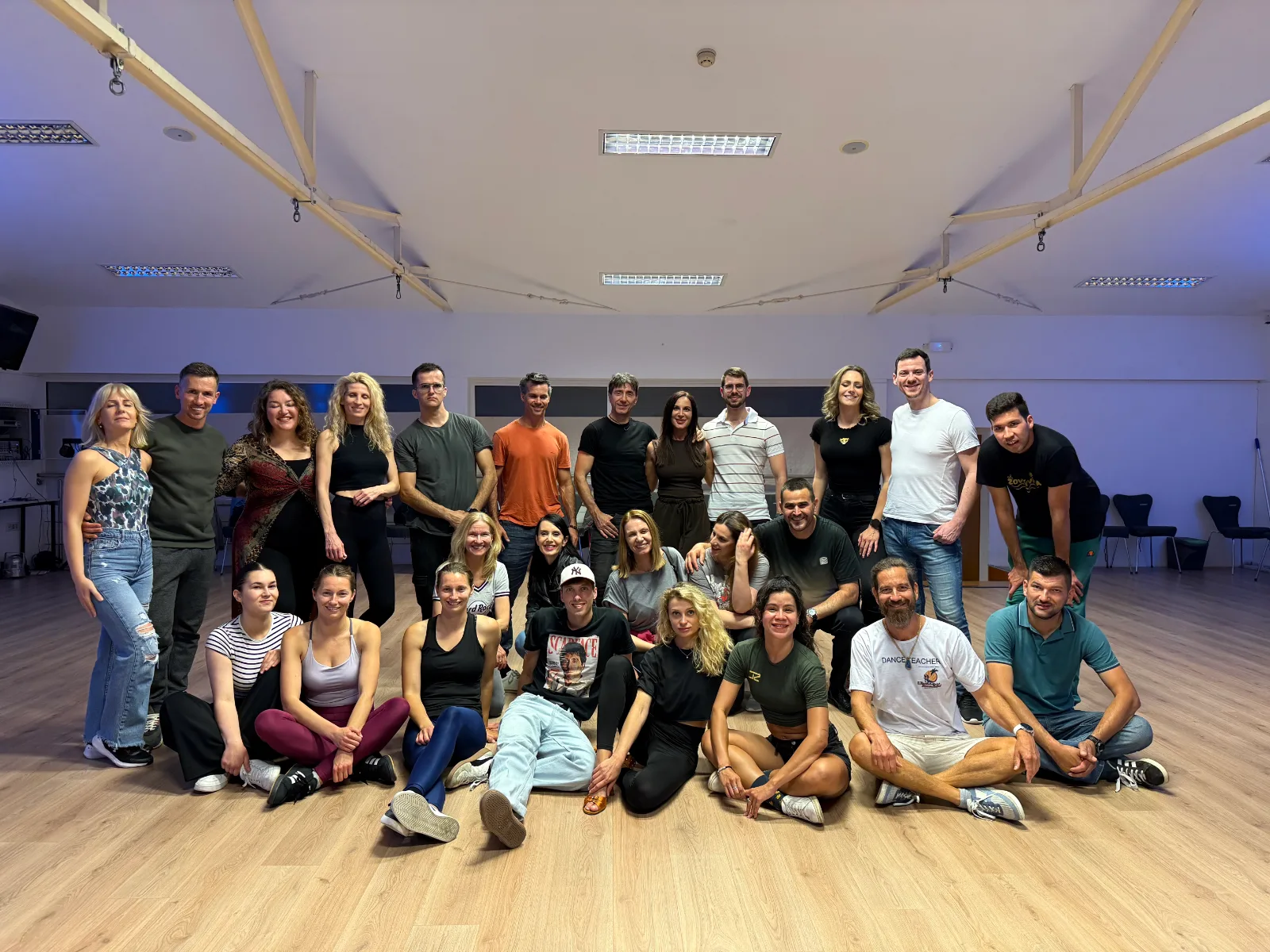
I’ve been both a dance student and a dance teacher for some years now, and over time I’ve realized that there is a skill we talk very little about:
Being a good student.
Learning doesn't just happen to you; it's a process you have to take an active part in. I believe you can learn something in almost any class, even if you already know the subject or the movement, or if the level seems "basic". But to do that, you need the right attitude, and you can train that too.
Well, here are a few tips that, based on my experience as both a student and a teacher, have helped me get far more out of my classes and create a better atmosphere for everybody.
1. Make sure you can see the teacher
If you’re in a group class and you can’t see the teacher, it is also your responsibility to move to a different spot. Find a position where you can see them, hear them, and observe their body.
It seems basic, but students often expect teachers to move, repeat, or adapt the entire class to compensate for their poor positioning. Also, being in a good spot doesn’t necessarily mean being in the front; it means being somewhere where you can be present.
2. Really observe
One of the things that has helped me the most as a student is to stop thinking only:
How do I do this move?
and start asking:
What is the teacher actually doing?
When someone demonstrates a movement, don’t just observe the final shape. Observe the weight, the frame, the position of the body, the feet, and which part of the body initiates the movement.
Especially in group classes, teachers try to explain many things at once. And even though we may want to stop and go into every small detail, we don’t always have the time.
Which is why, when you're a student, your ability to observe can greatly alter the way in which you learn; the difference between carrying out a movement 'similarly' and truly understanding it lies in the small details.
3. Avoid giving unsolicited corrections
This is probably one of the most important points for me.
In a group class, people come to dance for so many different reasons. Some mainly want to improve their technique, while others simply want to feel more comfortable, connect with other people, and enjoy themselves.
Imagine coming to class after having a terrible day and finding yourself with someone who spends the entire class correcting you. Or worse! Being corrected by every person in the class.
And let’s face it: your correction might not be correct.
If someone is hurting you or crossing a boundary, of course you can and should say something. But if it is a technical correction, especially one they didn’t ask for, I recommend letting the teacher handle it.
If you have a question about how to deal with a situation with your partner, ask the teacher. Don’t become the teacher of the person you are dancing with.
Pro tip: You can always give positive feedback tho.
4. Learn how to receive feedback
You can ask your classmate, but be smart about what you ask. Not necessarily:
What am I doing wrong?
Instead, ask:
How did this feel?
“Did it feel comfortable?”
Another person’s perception can give you very valuable information, but remember that your partner’s feedback is exactly that: their experience. It is not necessarily a technical explanation of what you should do.
If you receive a comment and want to improve, ask the teacher. (Am I saying this often enough?)
When you receive feedback, try to listen openly. Don't defend yourself or explain why you did it. Ask clarifying questions if necessary, say thank you, and then decide what to do with that information.
5. Ask questions
This seems obvious, but so many people don’t do it.
Often, your question is exactly what other people in the class were thinking but didn’t dare ask.
I know you have heard this before, but IT'S TRUE!!
6. Don’t try to take in all the content from the class
Another thing I’ve learned is that you don’t need to leave every class knowing how to execute absolutely everything.
Especially in styles like Brazilian Zouk, trying to take everything in at once can end up leaving you with nothing integrated.
Instead, when you finish a class, ask yourself:
What is one thing I need to practice after this?
One small idea, if you actually integrate it, is worth much more than many that you forget the next day.
7. Respond to your teacher
A dance class is not a lecture; it is a conversation.
When the teacher asks:
Is this clear?
Answer:
Yes.
No.
As teachers, we need information from the group in order to teach better. Sometimes we think everyone understood because nobody says anything, when in reality most people are still lost.
So participating is also a way of helping the teacher and your classmates.
A simple:
“One more time, please.”
Makes us feel heard as teachers. We want to bring you value; please let us know how.
And finally: arrive with curiosity
A good student is not the one who knows the most, does everything perfectly, or learns the fastest.
Being a good student means arriving with curiosity, respecting classmates, trusting the teacher, and knowing you are an active part of your own learning process.
Comments
Loading comments…
You'll be asked to sign in before posting — we'll keep your draft.