En🇺🇸
Es🇨🇴↓
One of the first things I noticed when I entered the dance world was that people seemed to have very different definitions of relationships.
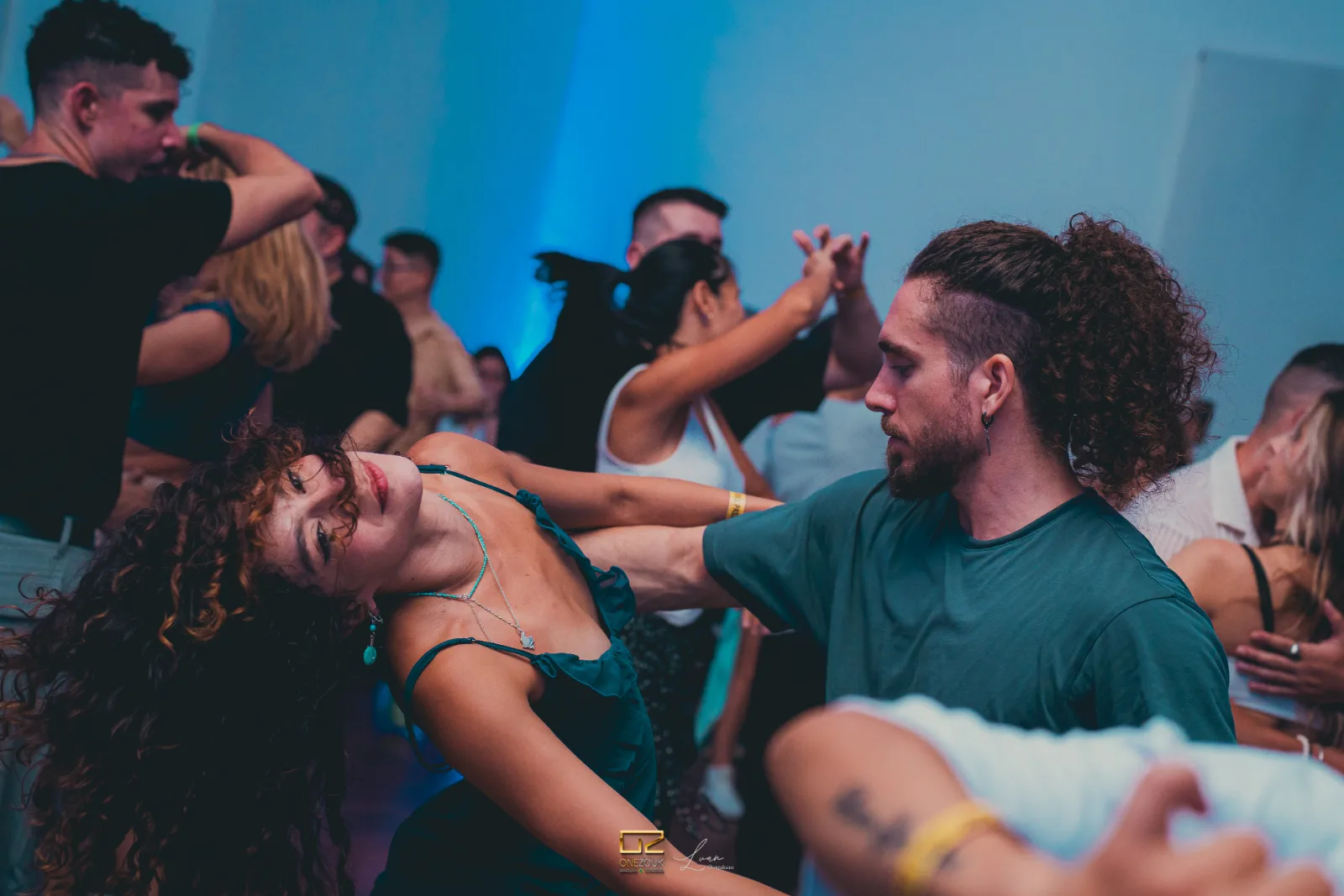
Dance communities are their own little ecosystems. There are so many dynamics surrounding dance: teachers and students, spaces for self-expression, connection, freedom, and indulgence. Relationships and power dynamics. It's like a small yet expansive ecosystem where people explore themselves and their relationship with connection.
It's very different from my past life.
In the “normal” world, people meet, date, commit, break up, and often never see each other again. In dance communities, everyone stays connected. Your ex might still be in your classes, your events, your friend group. Sometimes the ex of your friend becomes your partner… and then your ex…
Over the years, I've noticed people navigate this ecosystem in different ways.
Some people seem perfectly comfortable in hookup culture. We all know at least one character in our local community who is a serial flirt. New and attractive dancers automatically become their next target, and more often than not, those situations end in drama.
Then there is the Brazilian concept of ficante.
A ficante is someone you're seeing, getting to know, and spending time with romantically. There may be exclusivity, but there may not be. The default is usually not exclusivity, and the relationship only evolves into a more committed stage when someone explicitly asks the other person to become a ficante premium, or to namorar, to become partners.
What was more interesting for me was realizing that someone can be a ficante for months, sometimes even years, and can also have multiple ficantes at the same time.
Then there are people like me.
I have romantic connections. Sometimes I know they are temporary. Sometimes distance, life circumstances, or timing make it obvious from the beginning that they may not last.
Yet when I'm with someone, I'm with someone.
Whether it's for three days, three weeks, or three months, exclusivity has always felt like my default setting.
And then there are people who identify as non-monogamous.
This is where I get a bit more confused, because the more I listen to conversations around non-monogamy, the more I realize that the category seems much bigger than I originally thought. It includes people with multiple romantic relationships, people with casual connections, people with long-term partners, and people creating relationship structures I had never even considered.
To be completely honest, for a long time, I assumed that non-monogamy in dance communities was mostly an excuse to fuck around.
Lately, however, some conversations started to raise questions about whether that assumption was too simplistic.
After all, I haven't had an "official" relationship for some time. Yet I have had meaningful romantic connections.
And I've started wondering:
What is the actual difference between dating and non-monogamy?
Between "seeing someone" and being in some form of relationship with them?
At what point do we become emotionally responsible for another person?
Why do we often assume that if something isn't “official”, then no responsibilities exist?
And what does commitment even mean inside a community built around connection, freedom, travel, attraction, and constant proximity?
I've heard people say that defining is limiting.
At least for now, I don't feel the need to define myself as monogamous or non-monogamous.
What I do feel is curiosity.
Because the dance community may be one of the most interesting places to explore these questions. Many of the relationship structures that seem unconventional outside of dance appear almost normal inside it.
And it can be because dancers are avoiding commitment…
Or we're simply experimenting with different ways of creating it.
Es🇨🇴
¿En Zouk todos somos poly?
Una de las cosas que noté cuando entré al mundo del baile fue que las personas parecían tener definiciones muy distintas del significado de las relaciones.
Las comunidades de baile son ecosistemas. Hay tantas dinámicas alrededor del baile: profesores y estudiantes, espacios de expresión, conexión, libertad y libertinaje. Dinámicas de relaciones y de poder. Es como un pequeño-gran ecosistema donde las personas se exploran a sí mismas y su relación con la conexión.
Es muy diferente a mi vida anterior.
En el mundo “normal”, las personas se conocen, salen, se comprometen, terminan y muchas veces no vuelven a verse. En las comunidades de baile, todos siguen conectados. Tu ex puede seguir estando en tus clases, en tus eventos, en tu grupo de amigos. A veces el ex de tu amiga termina siendo tu pareja… y luego tu ex…
Con los años, he notado que las personas navegan este ecosistema de distintas maneras.
Algunas parecen completamente cómodas dentro de la cultura del hook-up. Todos conocemos al menos a un personaje en nuestra comunidad local que es un coqueto serial. Los bailarines nuevos y atractivos se convierten automáticamente en su siguiente objetivo y normalmente, esas situaciones terminan en drama.
Luego está el concepto brasileño de ficante.
Un ficante es alguien con quien sales, que estás conociendo, compartiendo tiempo de forma romántica. Puede haber exclusividad, pero también puede no haberla. El “default” suele ser no exclusividad, y la relación solo evoluciona a una etapa más comprometida cuando alguien le pregunta explícitamente a la otra persona si quiere ser “ficante premium”, o namorar, convertirse en pareja.
Lo que fue más interesante para mí fue darme cuenta de que alguien puede ser ficante durante meses, a veces incluso años, y también puede tener múltiples ficantes al mismo tiempo.
Hay personas como yo.
Yo tengo conexiones románticas. A veces sé que son temporales. A veces la distancia, las circunstancias de la vida o el timing hacen evidente desde el inicio que probablemente no duren.
Sin embargo, cuando estoy con alguien, estoy con alguien.
Ya sea por tres días, tres semanas, tres meses o tres años, la exclusividad siempre se ha sentido como mi “default”.
Y luego están las personas que se identifican como no monógamas.
Aquí es donde empiezo a sentir más confusión, porque cuanto más escucho conversaciones alrededor de la no monogamia, más me doy cuenta de que la categoría es mucho más amplia de lo que pensaba. Incluye personas con múltiples relaciones románticas, personas con conexiones casuales, personas con relaciones de largo plazo y personas con estructuras relacionales que nunca había considerado.
Si soy completamente honesta, durante mucho tiempo asumí que la no monogamia en las comunidades de baile era principalmente una excusa para “fuck around”.
Últimamente, sin embargo, esas conversaciones han empezado a hacerme cuestionar si esa suposición era demasiado simplista.
Después de todo, no he tenido una relación “oficial” en un tiempo. Sin embargo, sí he tenido conexiones románticas significativas.
Y he empezado a preguntarme:
¿Cuál es realmente la diferencia entre salir con personas y la no monogamia?
¿Entre “estar viendo a alguien” y estar en algún tipo de relación con esa persona?
¿En qué momento nos volvemos emocionalmente responsables de otra persona?
¿Por qué asumimos tantas veces que si algo no es “oficial”, entonces no existen responsabilidades?
¿Y qué significa realmente el compromiso dentro de una comunidad construida alrededor de la conexión, la libertad, los viajes, la atracción y la proximidad constante?
He escuchado decir que definir es limitar.
Por ahora, no siento la necesidad de definirme como monógama o no monógama.
Lo que sí siento es curiosidad.
Porque la comunidad de baile puede ser uno de los lugares más interesantes para explorar estas preguntas. Muchas de las estructuras relacionales que parecen poco convencionales fuera del baile, dentro de él se sienten casi normales.
Y puede ser porque los bailarines están evitando el compromiso…
O porque simplemente estamos experimentando con distintas formas de crearlo.
Comments
Loading comments…
You'll be asked to sign in before posting — we'll keep your draft.