En🇺🇸Pt🇧🇷↓
On the last Saturday of July, at Zouk Marathon Bonn, a DJ set began and the booth was empty.
The music was hers. The room was full. And on a screen, connected over Zoom from Minsk, twelve hundred kilometers and one refused visa away, Caroline, DJ K-line, watched the floor fill with dancers moving to a set she had built for them, and held up words she had written in large letters:
Music needs no visa.
"People came to the camera and said hi to me. It was so cute," she says. "I really felt like I played there."
This is a story about how she ended up on that screen instead of in that booth, and about what a DJ does with a year's worth of closed doors: she turns them into a set.
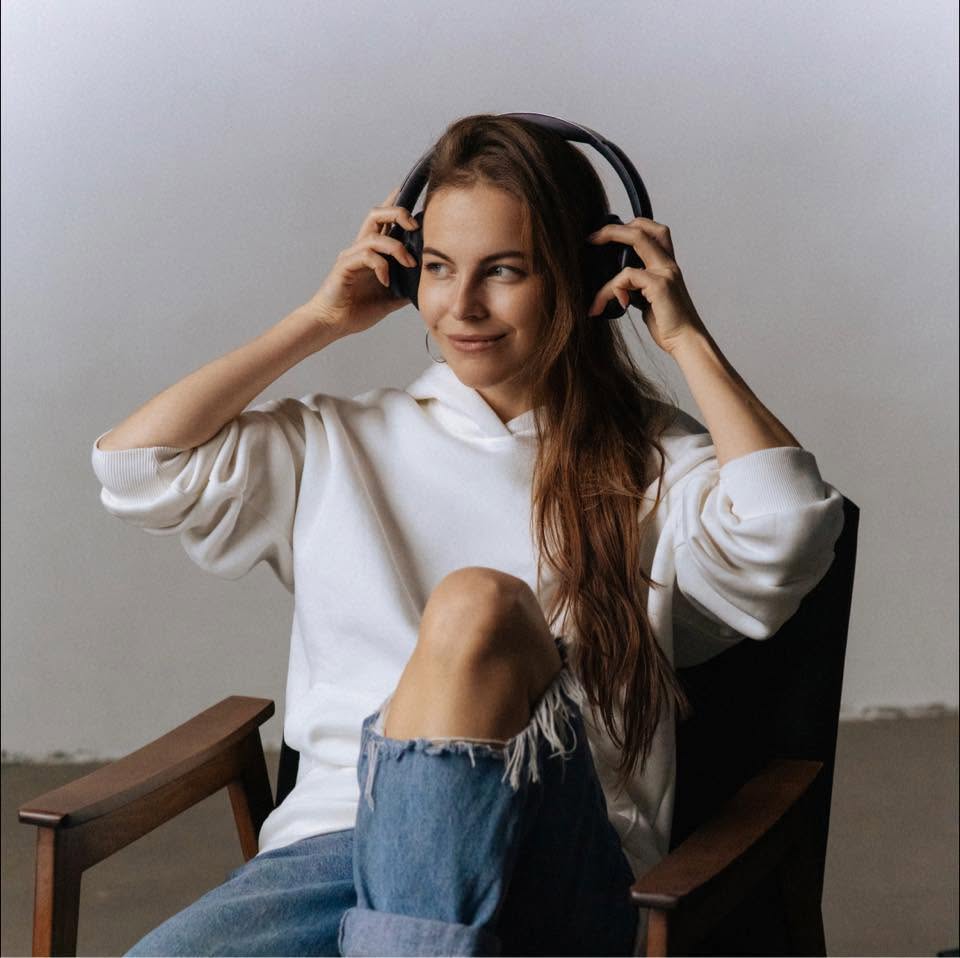
Caroline is from Minsk, Belarus. She started DJing during the pandemic, at underground parties where, in her words, "there were just two couples dancing." Not everyone liked what she played; she wanted a different sound than Minsk was used to. She built it anyway: a system of reading and playing the moods of a dance floor that she now teaches to other DJs, and that carried her, faster than she could believe, from what she calls the modest chair in the corner of a Minsk party to festival booths across Europe, and to a DJ of the Year award from her scene.
"I could never imagine that I will be here right now," she says. "Even with these two refusals."
The two refusals. Here is the arithmetic of her 2026, from her own accounting:
The spring worked. Barely, and beautifully. On two back-to-back thirty-day visas she played five events: Lisbon, Castle of Miracles, Hamburg, Barcelona, and a Swiss weekend with Cedric & Romane. The first stretch, she says, held the best events of her year: "I felt so much hope. I met so many interesting people. I was really so happy, so inspired." The second stretch was different: same festivals, same music, but played under the weight of the next application. "The events themselves didn't give me that much joy," she says. "This pressure I felt during the events. It influenced a lot."
Then came Bonn, the event she'd been trying to reach for two years. Last year she made it there sick. This year, Germany refused her visa after three weeks of waiting. She immediately filed a short-term Greek application as a plan B: three hundred euros, two more weeks of waiting, the organizers holding her slot, her travel already paid for by them, a friend asking "how can I plan the trip without you? I'm sure you will come."
The answer came one week before the event. No.
"You cannot influence the decision of these consuls with anything," she says. "Not with money, nor with invitation, nor with so many people waiting for you. And it's so unfair and so crazy."
She wants it said that people tried. Raphael from Hamburg sent an official invitation for the German application. Others wrote letters, offered words, waited with her. None of it moved the decision, and some things broke under the weight: "not every person can be there for you when you are that sad," she says of the year. "A lot of people turned away from me during this time." What survived was smaller and stronger: the people who stayed, and the music.
Because here is what she did with the week she should have spent packing.
She told the Bonn organizers she could send recorded sets, hours of them. They said yes. Then the idea grew: at party time, one of the organizers connected a laptop, and she joined her own set over Zoom. Not playing live (the venue couldn't support that) but present, visible, watching the floor react in real time to music she had built out of the whole year: "There were parts of anger, of sadness. There was a cry, there was a scream," she says of the set. Its centerpiece was a song she loves, whose lyric she borrowed as a message: If only I could, I'd make the world a better place.
▶ “Don’t You Cry”: the Bonn set, exactly as the floor heard it. / O set de Bonn, exatamente como a pista ouviu.
Her greatest fear had been that the weekend would simply happen without her: her slots absorbed, the room dancing on as if nothing was missing. Instead: "People wrote to me after the sets and told me I managed to give energy even though I was far away. It means I managed to do what I wanted. I felt a huge release."
The organizers, she wants you to know, were extraordinary, "so sweet, so supportive," absorbing the lost travel costs without a word of blame. And the friend who couldn't plan the trip without her? He went. He danced Bonn for both of them.
His name matters for the next part of the story: DJ Finik, Sergei, is one of the people with whom she organizes the other end of this story. The open door.
Every autumn in Grodno, Belarus, Caroline and her co-organizers run Zouk Non Stop: "for me, it's the best event in the world," she says, and she does not say it like a slogan. It is an immersion: actors move through the party and pull dancers into a story that the team rewrites each year. Last year the theme was The Little Prince. This year, October 1 to 4, they are staging Notre-Dame, after Hugo. "Our Notre-Dame will be a nightclub," she says.
And here is the part most of Europe doesn't know: you can come. Belarus admits a long list of nationalities visa-free, and an even longer list through the Grodno border region. There are no planes; you cross by bus, and the team runs one from Minsk so visitors see two cities on the way. Once there, everything costs half to a third of European prices. The border crossing is the only complicated part, she says, "but what we bring during this event is so special. I've never met anywhere in the world any event like this."
She calls the event a diplomatic mission, and chooses her words about it carefully.
"It's the only bridge right now for people in Europe to meet people from Russia, from Belarus, and to dance together. We are in the middle — but we are not with anyone. We are happy to give this opportunity: to dance with each other, to meet new mentalities. Even now there is a girl from Ukraine coming to us. I hope one day the world will become a better place and we will all meet — in Belarus or anywhere else — freely."
She knows she is one of the luckier ones, strange as that word sounds against two refusals. Artists in Russia, she says, mostly no longer try: single-entry visas, routed through Istanbul, for a seven-day trip. "There are a lot of very talented DJs who would like to explore the European dance floor, and they literally don't have this opportunity." "I don't support the Russian government," she adds, "but I really support Russian people, who suffer from the situation as much as Ukrainians do — it's not obvious, but they really do."
So what actually helps? Her list is short and practical. Official invitations, for the embassies that weigh them: Germany's does, she says, and Italy's may. Understanding from organizers when the answer comes late. And one more thing the scene could normalize, which Bonn just proved: when an artist cannot cross the border, let the music cross alone. "Even in the worst case, if I don't come — my energy is still precious, and I can still send it," she says. "The support I got in Bonn, even through Zoom — that's a huge energy exchange. It gives me motivation to try again."
She is trying again. The appointment queues now run from half a year to a full year, so the next round of paperwork starts immediately, aimed at next spring. In the meantime there are other doors (Asia, Brazil): "these doors are not closed. But I'm not closing the European one. Maybe I'm just taking a pause for half a year. I hope. Not more."
Her last message to us ended the way her Bonn set did: with the same wish, sent in both directions across a border that music keeps ignoring:
"Support is what always matters, and makes a world a better place."
The set she played that night is on her SoundCloud. The booth in Grodno, the first weekend of October, will not be empty.
Pt🇧🇷
No último sábado de julho, no Zouk Marathon Bonn, um set de DJ começou e a cabine estava vazia.
A música era dela. O salão estava cheio. E numa tela, conectada por Zoom desde Minsk, a mil e duzentos quilômetros e um visto negado de distância, Caroline, DJ K-line, assistia à pista se encher de dançarinos se movendo a um set que ela tinha construído para eles, segurando palavras que escreveu em letras grandes:
Music needs no visa. A música não precisa de visto.
"As pessoas vinham até a câmera dizer oi. Foi tão fofo", ela conta. "Eu realmente senti que toquei lá."
Esta é a história de como ela foi parar naquela tela em vez daquela cabine, e do que uma DJ faz com um ano inteiro de portas fechadas: ela as transforma em um set.
Caroline é de Minsk, Belarus. Começou a discotecar durante a pandemia, em festas underground onde, nas palavras dela, "havia só dois casais dançando". Nem todo mundo gostava do que ela tocava; ela queria um som diferente do que Minsk estava acostumada. Ela construiu mesmo assim: um sistema de ler e tocar os humores de uma pista que hoje ela ensina a outros DJs, e que a levou, mais rápido do que ela conseguia acreditar, do que ela chama de cadeirinha modesta no canto de uma festa de Minsk até cabines de festivais pela Europa, e a um prêmio de DJ do Ano na cena dela.
"Eu nunca poderia imaginar que estaria aqui agora", ela diz. "Mesmo com essas duas recusas."
As duas recusas. Aqui está a aritmética do 2026 dela, na contabilidade dela mesma:
Seis meses de tentativas. Cinco pedidos de visto, três deles protocolados em outro país, para onde ela precisou viajar só para dar entrada. Mais de 1.300 euros. Dois vistos concedidos, de trinta dias cada. Duas recusas. E, a cada rodada, de 21 a 45 dias de espera pela decisão de um cônsul.
A primavera funcionou. Por pouco, e lindamente. Com dois vistos consecutivos de trinta dias, ela tocou em cinco eventos: Lisboa, Castle of Miracles, Hamburgo, Barcelona e um fim de semana na Suíça com Cedric & Romane. O primeiro trecho, ela diz, teve os melhores eventos do ano dela: "Eu sentia tanta esperança. Conheci tanta gente interessante. Eu estava tão feliz, tão inspirada." O segundo trecho foi diferente: os mesmos festivais, a mesma música, mas tocados sob o peso do próximo pedido. "Os eventos em si não me deram tanta alegria", ela diz. "Essa pressão que eu senti durante os eventos. Influenciou muito."
Então veio Bonn, o evento que ela tentava alcançar havia dois anos. No ano passado, ela chegou lá doente. Este ano, a Alemanha negou o visto dela depois de três semanas de espera. Ela imediatamente protocolou um pedido grego de curta duração como plano B: trezentos euros, mais duas semanas de espera, os organizadores segurando o slot dela, a viagem já paga por eles, um amigo perguntando "como eu vou planejar a viagem sem você? Tenho certeza de que você vem."
A resposta chegou uma semana antes do evento. Não.
"Você não consegue influenciar a decisão desses cônsules com nada", ela diz. "Nem com dinheiro, nem com carta-convite, nem com tanta gente te esperando. E é tão injusto e tão maluco."
Ela faz questão de dizer que as pessoas tentaram. Raphael, de Hamburgo, enviou uma carta-convite oficial para o pedido alemão. Outros escreveram cartas, ofereceram palavras, esperaram junto. Nada disso moveu a decisão, e algumas coisas quebraram sob o peso: "nem toda pessoa consegue estar ali por você quando você está triste assim", ela diz sobre o ano. "Muita gente se afastou de mim nesse tempo." O que sobreviveu era menor e mais forte: as pessoas que ficaram, e a música.
Porque aqui está o que ela fez com a semana que deveria ter passado fazendo malas.
Ela disse aos organizadores de Bonn que podia mandar sets gravados, horas deles. Eles disseram sim. Então a ideia cresceu: na hora da festa, um dos organizadores conectou um laptop, e ela entrou no próprio set por Zoom. Não tocando ao vivo (o espaço não tinha estrutura para isso), mas presente, visível, vendo a pista reagir em tempo real a uma música que ela construiu com o ano inteiro: "Tinha partes de raiva, de tristeza. Tinha um choro, tinha um grito", ela diz do set. A peça central era uma música que ela ama, cuja letra ela emprestou como mensagem: If only I could, I'd make the world a better place (se eu pudesse, eu faria do mundo um lugar melhor).
O maior medo dela era que o fim de semana simplesmente acontecesse sem ela: os slots dela absorvidos, o salão dançando como se não faltasse nada. Em vez disso: "Pessoas me escreveram depois dos sets dizendo que eu consegui dar energia mesmo estando longe. Significa que eu consegui fazer o que eu queria. Eu senti um alívio enorme."
Os organizadores, ela quer que você saiba, foram extraordinários, "tão queridos, tão solidários", absorvendo os custos perdidos da viagem sem uma palavra de cobrança. E o amigo que não conseguia planejar a viagem sem ela? Ele foi. Dançou Bonn pelos dois.
O nome dele importa para a próxima parte da história: DJ Finik, Sergei, é uma das pessoas com quem ela organiza a outra ponta desta história. A porta aberta.
Todo outono, em Grodno, Belarus, Caroline e seus co-organizadores realizam o Zouk Non Stop: "para mim, é o melhor evento do mundo", ela diz, e não diz como slogan. É uma imersão: atores circulam pela festa e puxam os dançarinos para dentro de uma história que a equipe reescreve a cada ano. No ano passado, o tema foi O Pequeno Príncipe. Este ano, de 1º a 4 de outubro, eles vão encenar Notre-Dame, de Hugo. "A nossa Notre-Dame vai ser uma boate", ela diz.
E aqui está a parte que a maior parte da Europa não sabe: dá para ir. Belarus admite uma longa lista de nacionalidades sem visto, e uma lista ainda maior pela região fronteiriça de Grodno. Não há voos; a travessia é de ônibus, e a equipe opera um saindo de Minsk, para os visitantes conhecerem duas cidades no caminho. Chegando lá, tudo custa da metade a um terço dos preços europeus. A travessia da fronteira é a única parte complicada, ela diz, "mas o que a gente entrega nesse evento é tão especial. Eu nunca encontrei em lugar nenhum do mundo um evento como esse."
Ela chama o evento de missão diplomática, e escolhe as palavras sobre isso com cuidado.
"É a única ponte que existe agora para pessoas da Europa encontrarem pessoas da Rússia, de Belarus, e dançarem juntas. Nós estamos no meio — mas não estamos com ninguém. Ficamos felizes de dar essa oportunidade: dançar uns com os outros, conhecer mentalidades novas. Mesmo agora tem uma menina da Ucrânia vindo. Eu espero que um dia o mundo se torne um lugar melhor e que a gente possa se encontrar — em Belarus ou em qualquer lugar — livremente."
Ela sabe que é uma das mais sortudas, por mais estranha que a palavra soe diante de duas recusas. Artistas na Rússia, ela conta, em geral nem tentam mais: vistos de entrada única, roteados por Istambul, para uma viagem de sete dias. "Há muitos DJs talentosos que adorariam explorar a pista europeia, e eles literalmente não têm essa oportunidade." "Eu não apoio o governo russo", ela acrescenta, "mas eu apoio muito o povo russo, que sofre com a situação tanto quanto os ucranianos — não é óbvio, mas sofre."
Então o que ajuda, de verdade? A lista dela é curta e prática. Cartas-convite oficiais, para as embaixadas que as consideram: a da Alemanha considera, ela diz, e a da Itália talvez. Compreensão dos organizadores quando a resposta chega em cima da hora. E mais uma coisa que a cena poderia normalizar, e que Bonn acabou de provar: quando a artista não pode cruzar a fronteira, deixem a música cruzar sozinha. "Mesmo no pior caso, se eu não for — a minha energia continua preciosa, e eu ainda posso enviá-la", ela diz. "O apoio que recebi em Bonn, mesmo pelo Zoom — é uma troca de energia enorme. Me dá motivação para tentar de novo."
Ela está tentando de novo. As filas de agendamento hoje vão de meio ano a um ano inteiro, então a próxima rodada de papelada começa imediatamente, mirando a próxima primavera. Enquanto isso, existem outras portas (Ásia, Brasil): "essas portas não estão fechadas. Mas eu não estou fechando a europeia. Talvez eu só faça uma pausa de meio ano. Eu espero. Não mais."
A última mensagem dela para nós terminou do jeito que o set de Bonn terminou: com o mesmo desejo, enviado nas duas direções através de uma fronteira que a música insiste em ignorar:
"Apoio é o que sempre importa, e faz do mundo um lugar melhor."
O set daquela noite está no SoundCloud dela. A cabine em Grodno, no primeiro fim de semana de outubro, não vai estar vazia.
Interview conducted over Instagram voice messages on July 31, 2026; quotes lightly edited for clarity. Visa figures are hers, from her public post of July 2026. / Entrevista realizada por mensagens de voz no Instagram em 31 de julho de 2026; citações levemente editadas para clareza. Os números dos vistos são dela, do seu post público de julho de 2026.
Comments
Loading comments…
You'll be asked to sign in before posting — we'll keep your draft.