En🇺🇸
Es🇨🇴↓
I’ve been in an artistic residency in Croatia for about a month now.
I’m collaborating with Guido, an artist and organizer who has spent over 15 years working in the Brazilian Zouk community here in Europe, and more than a year and a half exploring Lambada.
Lambada, although similar and even being the most prominent origin of Brazilian Zouk, feels different in the body. It has a different basic, a different frame. Both share a sense of flow, but from different approaches. From my perspective, Lambada carries continuity through the footwork; it almost never stops; one thing connects to the next quickly and fluidly. In Zouk, movement flows more from a kind of body echo.
Same same, but different.
When we train together, Lambada has become our comfort zone. And when we say, “let’s dance Zouk,” it feels harder than it should.
This has made me think a lot about something I’ve heard over and over again in dance classes:
To improve X style, learn Y style.
To improve your Zouk, learn Lambada.
To improve your sensual bachata, learn Zouk.
To improve your traditional bachata, learn merengue.
How many times have you heard that?
I don’t completely agree with these kinds of statements. And honestly, I often find them irresponsible and not very pedagogical.
I think that if you learn a different style only to improve the first one, you risk not improving in either. Especially if there’s no real desire there.
Each style has its own feeling and its own body logic, starting from the basic step and the way music is understood. Respecting a style means respecting that way of understanding the body and the rhythm. If you’re only trying to extract what’s “useful” for something else, the process becomes long and often frustrating.
More information in the body is not always growth; sometimes it’s confusion.
Languages start to mix… and not always in a functional way.
If you want to improve in a style, practice the style.
Period.
With purpose, with intention. Choosing your teachers carefully and actually committing to the process.
If you’re interested in elements that come from other styles, you can learn from teachers who have already walked that path and know how to translate those elements into what you’re trying to develop.
And if what you want is to go deeper into another style because you like it, because you’re curious, because you want to dance it well too, because you want to understand what you’re doing with context… perfect.
But then there’s another responsibility.
Training your body not only in the styles, but in the transition between them.
Learning how to switch languages consciously.
And yes, learning Lambada can absolutely help you understand many certain Zouk elements better: bonecas, desprezadas, sontinhos… many dynamics. But then, remember why you’re training each thing.
Personally, I really enjoy both. And in my artistic life, I’ve explored many styles: tango, salsa, bachata, Zouk, and Lambada.
But I also have to be honest. If you asked me to dance tango today, I wouldn’t do it well. My salsa already looks quite “Zouk-influenced.” And that’s okay.
Because in this moment of my path, I’m choosing to have a body more deeply connected to Zouk.
So, depending on your own goals, you can train in different styles, but also train the awareness between styles. Not just accumulating languages in the body, but learning them with love, with presence, and trying to stay committed to the work you’ve already done.
And teachers…
If we want to promote a style, let’s not mislead students. Let’s do it responsibly. Learning a full style is not easy.
It’s like telling someone who is learning Spanish that they should learn Latin.
Yes, it can help…
But the real question is:
To what extent is it actually necessary for what that person wants to express today?
Es🇨🇴
Lambada puede arruinar tu Zouk
Llevo aproximadamente un mes en una residencia artística en Croacia.
Estoy colaborando con Guido, un artista y organizador que lleva más de 15 años trabajando en la comunidad de Zouk Brasileño aquí en Europa y más de un año y medio explorando Lambada.
La Lambada, aunque similar al Zouk, tiene una sensación distinta en el cuerpo, un básico distinto y un frame distinto. Ambos comparten una sensación de flow, pero desde enfoques diferentes. Desde mi punto de vista, la Lambada tiene esa continuidad desde el footwork, que casi nunca se detiene; una cosa conecta con la otra de forma rápida y fluida. En el Zouk, el movimiento fluye más desde el eco corporal.
Same same, but different.
Cuando entrenamos juntos, la Lambada se convirtió en nuestra zona de confort. Y cuando decimos “vamos a bailar Zouk”, nos cuesta.
Esta situación me ha llevado a pensar mucho en algo que he escuchado repetidamente en los salones de clase:
Para mejorar X estilo, aprende Y estilo.
Para mejorar tu Zouk, aprende Lambada.
Para mejorar tu bachata sensual, aprende Zouk.
Para mejorar tu bachata sensual, aprende bachata tradicional.
¿Cuántas veces has escuchado eso?
No estoy de acuerdo completamente con ese tipo de expresiones. Nunca lo he estado. Y, honestamente, muchas veces me parecen irresponsables y antididácticas.
Si aprendes un estilo diferente solo para mejorar el primero, te estás arriesgando a no mejorar en ninguno de los dos. Especialmente si no hay deseo real ahí.
Cada estilo tiene una sensación y una corporalidad distinta, empezando por el básico y la forma en la que se entiende la música. Respetar un estilo es respetar esa manera de entender el cuerpo y el ritmo. Si solo quieres extraer lo “útil” para otra cosa, el proceso se vuelve largo y muchas veces frustrante. Más información en el cuerpo no siempre es crecimiento; a veces es confusión.
Los lenguajes empiezan a mezclarse… y no siempre de forma funcional.
Si quieres mejorar en un estilo, practica el estilo.
Fin.
Con propósito, con intención. Eligiendo bien los profesores y aplicándote de verdad.
Si te interesan elementos que vienen de otros estilos. Puedes acercarte a profesores que ya han recorrido ese camino y que saben traducir esos elementos hacia lo que tú estás buscando.
Y si lo que quieres es profundizar en otro estilo porque te gusta, porque te da curiosidad, porque quieres bailarlo bien también, porque quieres entender lo que estás haciendo con contexto… perfecto.
Pero ahí hay otra responsabilidad.
Entrenar a tu cuerpo no solo en los estilos, sino en la transición entre ellos.
Aprender a cambiar de lenguaje con conciencia.
Y sí, aprender Lambada definitivamente puede ayudarte a entender mejor ciertos elementos del Zouk: bonecas, desprezadas, sontinhos… muchas dinámicas. Pero entonces, recuerda por qué estás entrenando cada cosa.
Yo personalmente disfruto mucho ambos. Y en mi vida artística he explorado muchos estilos: tango, salsa, bachata, zouk, lambada. Pero también tengo que ser honesta; si hoy me piden bailar un tango, no lo haría bien. Mi salsa ya se ve bastante zoukera. Y está bien.
Porque en este momento de mi camino, estoy eligiendo un cuerpo más profundamente conectado al Zouk.
Entonces, dependiendo de tus objetivos, puedes entrenar otros estilos y la conciencia entre ellos.
No solo acumular lenguajes en el cuerpo sin propósito, sino aprenderlos con amor, con presencia y tratando de no descuidar el trabajo ya hecho.
Y profes…
Si queremos promover un estilo, no engañemos a los estudiantes. Hagámoslo con responsabilidad. Aprender un estilo completo no es fácil. Es un proceso profundo.
Es como decirle a alguien que está aprendiendo español que debería aprender latín.
Sí, ayuda… pero la pregunta real es: ¿Hasta qué punto es necesario para lo que esa persona realmente quiere comunicar hoy?
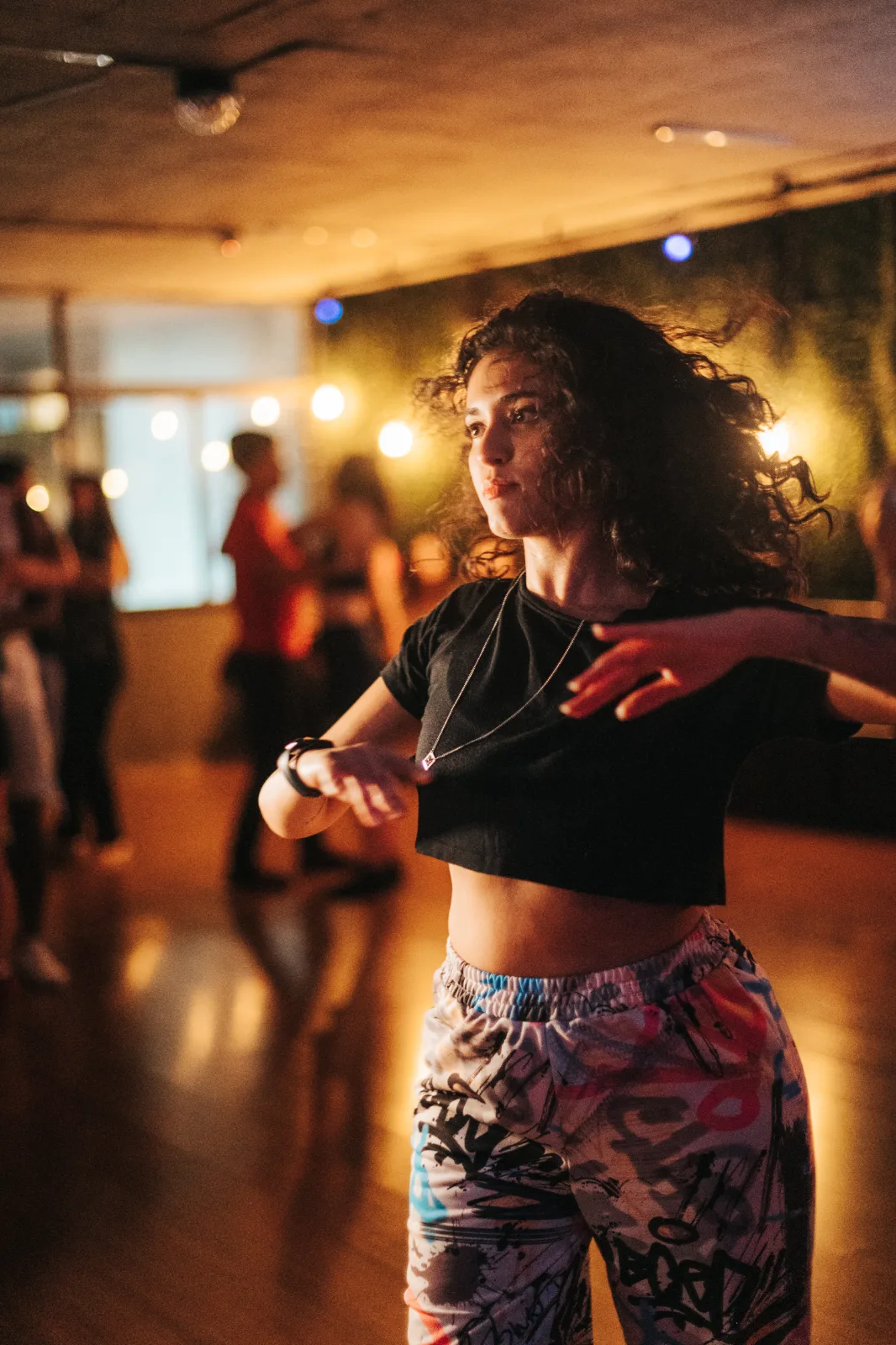
Photo Credit: @g.teixeirafoto
Comments
Loading comments…
You'll be asked to sign in before posting — we'll keep your draft.